News (click to select category)
Application Scenes and Selection Instructions of Brinell, Rockwell, Vickers and Brovey Hardness Testers
Date:2026-09-04ID: 386Heat:
Application Scenes and Selection Instructions of Brinell, Rockwell, Vickers and Brovey Hardness Testers
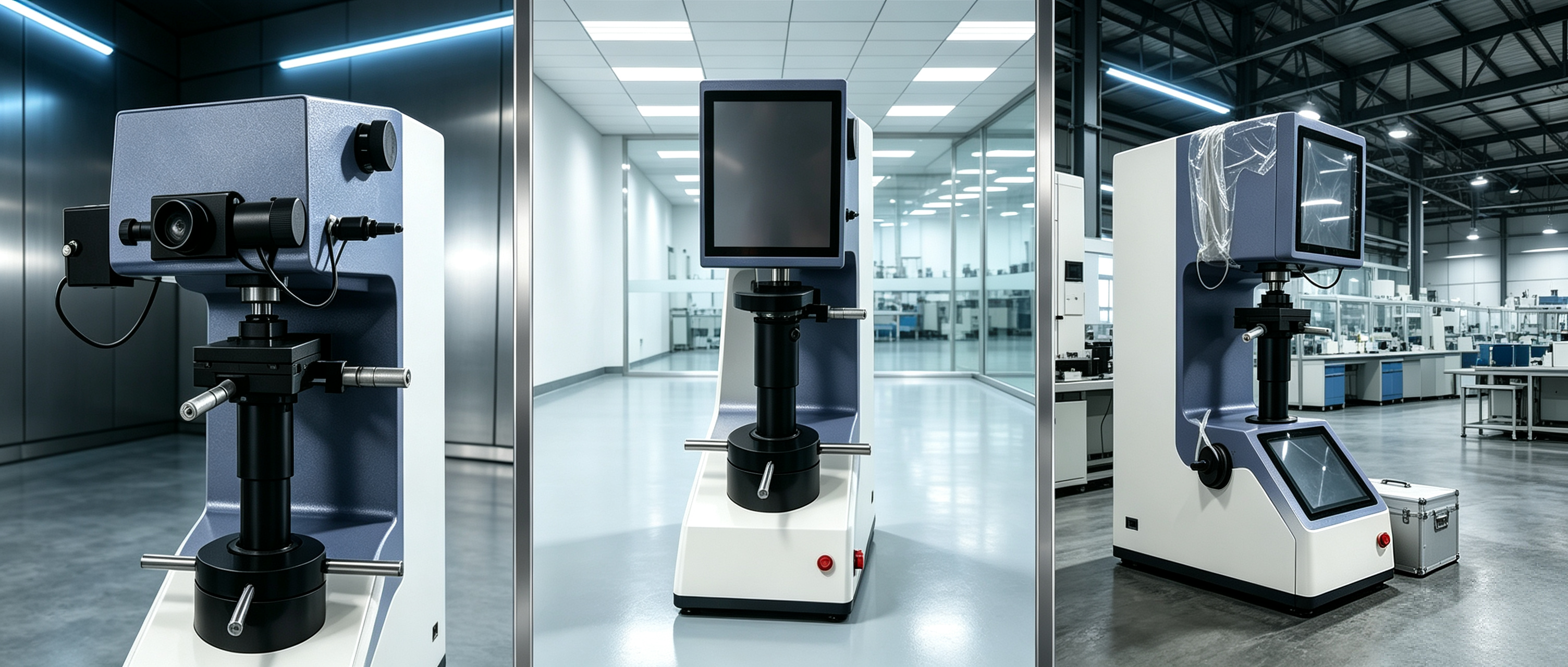
Hardness detection is the basic and core quality detection link in metal materials, mechanical manufacturing and heat treatment processes, and it is an important basis for judging material properties, verifying processing technology and controlling product quality. There are four kinds of hardness testers commonly used in industrial testing field: Brinell hardness tester, Rockwell hardness tester, Vickers hardness tester and Brovey hardness tester. Different devices have different detection principles and applicable scenarios, and reasonable selection can effectively ensure the accuracy, compliance and effectiveness of detection data.
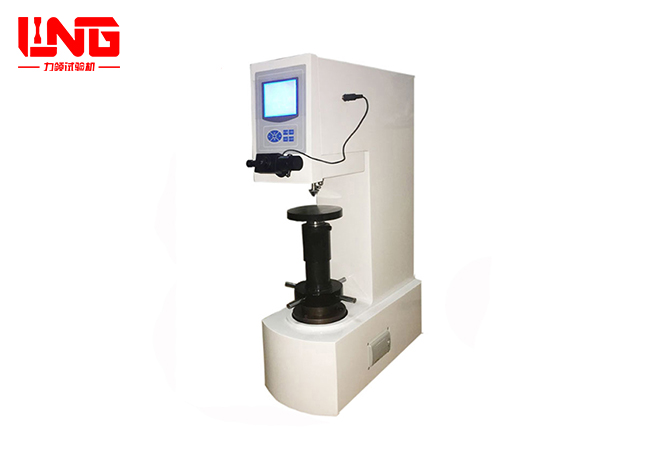
1. Brinell Hardness Tester (HBW)
Application scenario: It is suitable for the inspection of medium and low hardness materials and blank workpieces, including coarse-grained workpieces such as cast iron, cast steel and forgings, nonferrous metal alloys such as aluminum and copper, and annealed, normalized and quenched and tempered steel, and is widely used for raw material warehousing inspection and material uniformity inspection.
Application scenario: It is mainly used for the detection of medium and low hardness materials and blank workpieces, including coarse-grained workpieces such as cast iron, cast steel and forgings, nonferrous metal alloys such as aluminum and copper, and annealed, normalized and quenched and tempered steel, and is widely used for raw material warehousing inspection and material uniformity inspection.
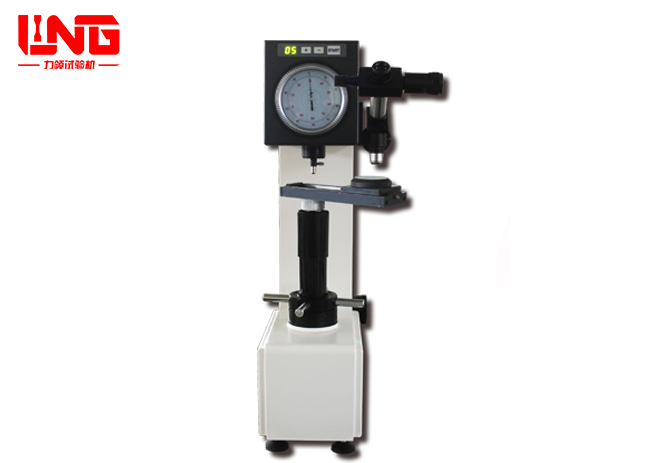
Second, Rockwell Hardness Tester (HRC/HRB/HRA)
Rockwell hardness tester is a common equipment for mass production testing, which determines the hardness by the indentation depth of the indenter, without manual measurement of indentation, and the equipment automatically reads and has high detection efficiency. The equipment is equipped with multiple sets of standard scales, which can adapt to metal materials with different hardness ranges and meet the requirements of industrial batch quality inspection.
Application scenario: it is suitable for testing finished workpieces and high-hardness materials, and is suitable for heat-treating hard workpieces such as hardened steel, die steel, bearings, gears and cutters. At the same time, it can complete batch rapid quality inspection of products such as plates, pipes and standard parts, and is widely used in quality inspection of heat-treating production lines.
Vickers hardness tester (HV)
Vickers hardness tester adopts diamond pyramid indenter and has global continuous measuring scale, which can cover all kinds of metal detection from soft alloy to superhard material. The equipment has tiny indentation and excellent microscopic inspection performance, which can complete the precise inspection that is difficult to be realized by conventional equipment. The inspection data can be used as the basis for process analysis and professional arbitration.
Application scenario: it is suitable for the detection of precision workpieces, micro-parts and surface hardened layers, mainly used for the hardness and depth testing of surface treated layers such as carburizing, nitriding and electroplating, and also suitable for the detection of thin slices, filaments, cutter edges and weld micro-areas, which are mostly used in product development, process analysis and precision quality inspection scenarios.
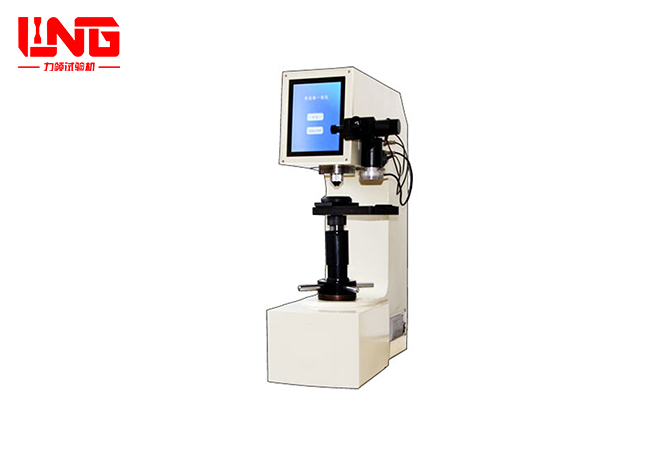
Fourth, Brovey hardness tester
Brovey hardness tester is a multifunctional integrated testing equipment, which integrates the testing functions of Brinell, Rockwell and Vickers. By changing the pressure head and adjusting the test force, different testing modes can be switched, and it is not necessary to purchase multiple devices separately, so the equipment utilization rate is high and the adaptability is wide.
Application scenario: it is suitable for small and medium-sized factories, quality inspection rooms and laboratories with complex inspection categories and large material span. It can take into account various inspection requirements such as rough inspection of blank, quick inspection of finished products and precise micro-inspection, and is suitable for quality inspection with scattered frequency and mixed scenes, with strong versatility.
V. Reference for Equipment Selection
Combined with industrial practice standards, it can be accurately selected according to testing requirements:
Brinell hardness tester: it is suitable for testing raw materials of blank castings, forgings, non-ferrous metals and annealing quenching and tempering.
Rockwell hardness tester: it is suitable for testing heat-treated quenched products, hard parts and mass-produced workpieces.
Vickers hardness tester: suitable for surface hardening layer, precision micro-parts, weld micro-area and scientific research arbitration detection.
Brovey Hardness Tester: It is suitable for multi-category and multi-working condition mixed detection scenarios, and can meet the requirements of universal and diversified quality inspection.
VI. Summary
All kinds of hardness testers have exclusive application advantages and are suitable for different working conditions. Brinell hardness tester is suitable for the overall performance testing of materials, Rockwell hardness tester is suitable for mass production and efficient testing, Vickers hardness tester is suitable for precision microscopic testing, and Brovey hardness tester is suitable for multi-scene universal testing. Reasonable selection according to workpiece material, process state and testing requirements can ensure the accuracy and compliance of testing data and provide reliable data support for product quality control and process optimization.
Hardness detection is the basic and core quality detection link in metal materials, mechanical manufacturing and heat treatment processes, and it is an important basis for judging material properties, verifying processing technology and controlling product quality. There are four kinds of hardness testers commonly used in industrial testing field: Brinell hardness tester, Rockwell hardness tester, Vickers hardness tester and Brovey hardness tester. Different devices have different detection principles and applicable scenarios, and reasonable selection can effectively ensure the accuracy, compliance and effectiveness of detection data.
1. Brinell Hardness Tester (HBW)
Application scenario: It is suitable for the inspection of medium and low hardness materials and blank workpieces, including coarse-grained workpieces such as cast iron, cast steel and forgings, nonferrous metal alloys such as aluminum and copper, and annealed, normalized and quenched and tempered steel, and is widely used for raw material warehousing inspection and material uniformity inspection.
Application scenario: It is mainly used for the detection of medium and low hardness materials and blank workpieces, including coarse-grained workpieces such as cast iron, cast steel and forgings, nonferrous metal alloys such as aluminum and copper, and annealed, normalized and quenched and tempered steel, and is widely used for raw material warehousing inspection and material uniformity inspection.
Second, Rockwell Hardness Tester (HRC/HRB/HRA)
Rockwell hardness tester is a common equipment for mass production testing, which determines the hardness by the indentation depth of the indenter, without manual measurement of indentation, and the equipment automatically reads and has high detection efficiency. The equipment is equipped with multiple sets of standard scales, which can adapt to metal materials with different hardness ranges and meet the requirements of industrial batch quality inspection.
Application scenario: it is suitable for testing finished workpieces and high-hardness materials, and is suitable for heat-treating hard workpieces such as hardened steel, die steel, bearings, gears and cutters. At the same time, it can complete batch rapid quality inspection of products such as plates, pipes and standard parts, and is widely used in quality inspection of heat-treating production lines.
Vickers hardness tester (HV)
Vickers hardness tester adopts diamond pyramid indenter and has global continuous measuring scale, which can cover all kinds of metal detection from soft alloy to superhard material. The equipment has tiny indentation and excellent microscopic inspection performance, which can complete the precise inspection that is difficult to be realized by conventional equipment. The inspection data can be used as the basis for process analysis and professional arbitration.
Application scenario: it is suitable for the detection of precision workpieces, micro-parts and surface hardened layers, mainly used for the hardness and depth testing of surface treated layers such as carburizing, nitriding and electroplating, and also suitable for the detection of thin slices, filaments, cutter edges and weld micro-areas, which are mostly used in product development, process analysis and precision quality inspection scenarios.
Fourth, Brovey hardness tester
Brovey hardness tester is a multifunctional integrated testing equipment, which integrates the testing functions of Brinell, Rockwell and Vickers. By changing the pressure head and adjusting the test force, different testing modes can be switched, and it is not necessary to purchase multiple devices separately, so the equipment utilization rate is high and the adaptability is wide.
Application scenario: it is suitable for small and medium-sized factories, quality inspection rooms and laboratories with complex inspection categories and large material span. It can take into account various inspection requirements such as rough inspection of blank, quick inspection of finished products and precise micro-inspection, and is suitable for quality inspection with scattered frequency and mixed scenes, with strong versatility.
V. Reference for Equipment Selection
Combined with industrial practice standards, it can be accurately selected according to testing requirements:
Brinell hardness tester: it is suitable for testing raw materials of blank castings, forgings, non-ferrous metals and annealing quenching and tempering.
Rockwell hardness tester: it is suitable for testing heat-treated quenched products, hard parts and mass-produced workpieces.
Vickers hardness tester: suitable for surface hardening layer, precision micro-parts, weld micro-area and scientific research arbitration detection.
Brovey Hardness Tester: It is suitable for multi-category and multi-working condition mixed detection scenarios, and can meet the requirements of universal and diversified quality inspection.
VI. Summary
All kinds of hardness testers have exclusive application advantages and are suitable for different working conditions. Brinell hardness tester is suitable for the overall performance testing of materials, Rockwell hardness tester is suitable for mass production and efficient testing, Vickers hardness tester is suitable for precision microscopic testing, and Brovey hardness tester is suitable for multi-scene universal testing. Reasonable selection according to workpiece material, process state and testing requirements can ensure the accuracy and compliance of testing data and provide reliable data support for product quality control and process optimization.
About LiLing
Product range
News
Contact LiLing
National Service Hotline:+86 18660398828
Address:Building 2, No. 6 Weihua West Road, Shizhong District, Jinan City, Shandong Province,China


Business consultation (WeChat)
Technical Support: ChaoYueHuLian
Links: