News (click to select category)
The larger the sensor range, the better. Many people choose the testing machine wrong in the first step.
Date:2026-09-30ID: 399Heat:
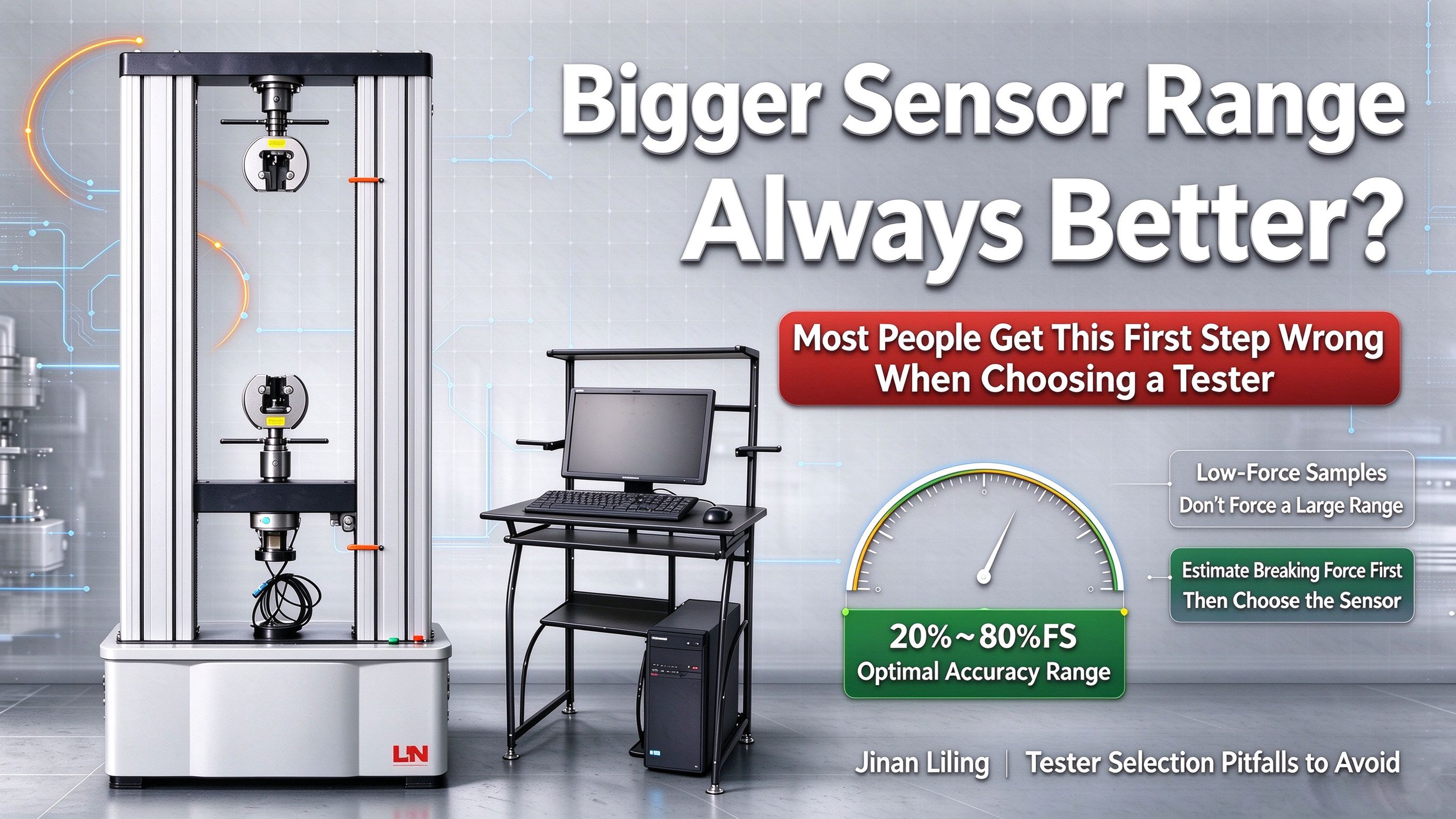
When purchasing more and selecting laboratory personnel, they all stepped on this pit: they felt that the larger the sensor range, the higher the accuracy and the more durable the machine, and directly chose the large-tonnage sensor. Actually, this is a typical misunderstanding.
The nominal accuracy of the force sensor can usually be guaranteed only in the range of 20% ~ 80% of the full scale.
For example: 100kN sensor, the accurate range is 20kN~80kN. If the breaking force of your sample is only 2kN, use a 100kN sensor to measure it, and only use 2% of the full range of the sensor. At this time, the zero drift and circuit noise of the sensor itself will be amplified, and the data measured by parallel samples will fluctuate greatly and have poor repeatability. It is not that the sensor itself is unqualified, but that it is not used in its best working range.
Correct selection idea: first estimate the maximum breaking force of the sample, so that the maximum test force falls between 20% and 80% of the full range of the sensor. Less than 20% FS: the measurement range is too large, and the test error becomes larger; Above 80% FS: the safety margin is insufficient, and the sample fracture impact is easy to overload and damage the sensor.
Give two actual scenarios:
When the plastic is stretched, the maximum force of the sample is about 2kN → 5kN sensor is preferred; If equipped with 100kN sensor, the data dispersion is serious.
Sheet metal is stretched, and the maximum force is about 60kN → 100kN sensor is selected, which just falls in the best force measuring range.
Focus on distinguishing two concepts: the tonnage of the main frame ≠ sensor range The main frame represents the maximum bearing capacity of the mechanical structure; The sensor is an independent force measuring element. Even a 100kN large frame can be matched with a 5kN small sensor, which is specially used to measure small force samples such as films and plastics, without conflict with each other.
Supplementary note: If there are many kinds of laboratory samples, both high-strength and low-strength samples should be tested, multiple sensors with different ranges can be configured and replaced as needed, taking into account the testing accuracy of high and low strength. After the sensor is overloaded, the internal strain gauge is prone to plastic deformation, which may cause permanent damage and the maintenance and replacement cost is very high.
Bottom line: The bigger the sensor, the better. The proper range is the key. The maximum force of the sample is estimated first, and then the sensor is matched. Don't blindly choose a large tonnage!
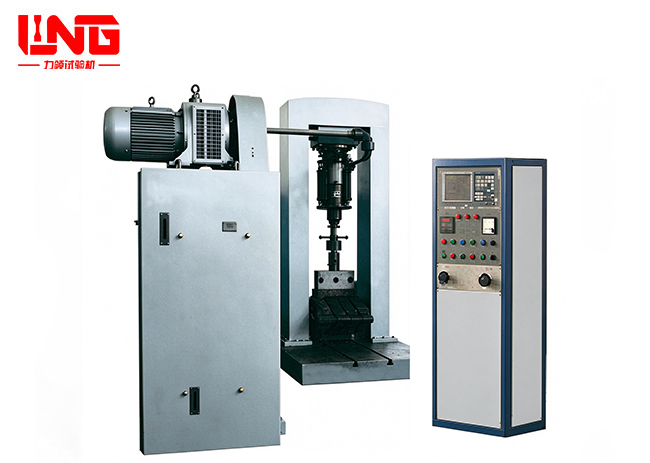
PMS-500 Hydraulic Pulsating Fatigue Tester
PMS-500 hydraulic pulsation testing machine is suitable for ...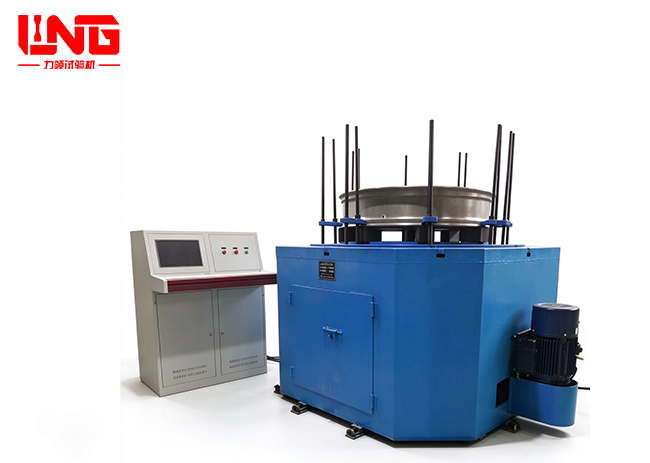
Fatigue of LPQW-50000 Wheel in Rotation and Bending testing machine
This testing machine is driven by variable frequency motor t...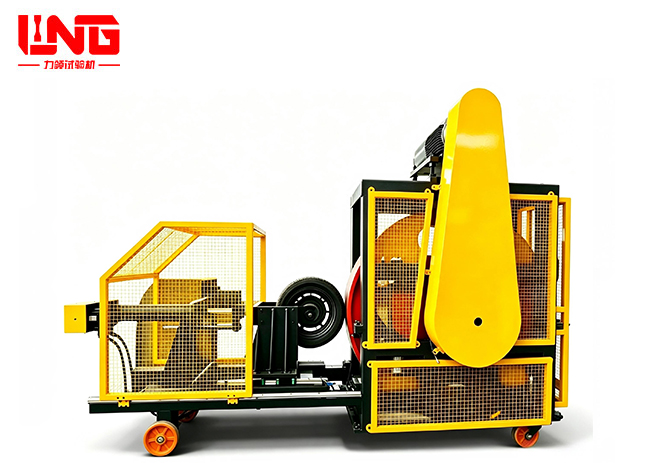
LTNJ-20-1 (single station) tire high-speed durability tester
This testing machine is used to test the high-speed performa...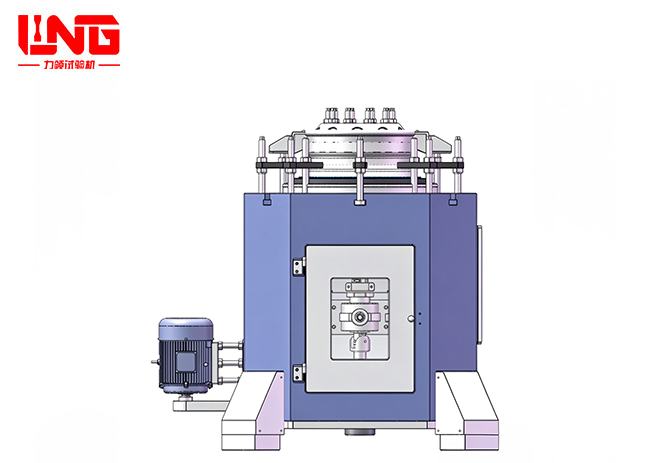
PQW-20000 Wheel rim rotary bending test bench
With the development of heavy load, light weight and long se...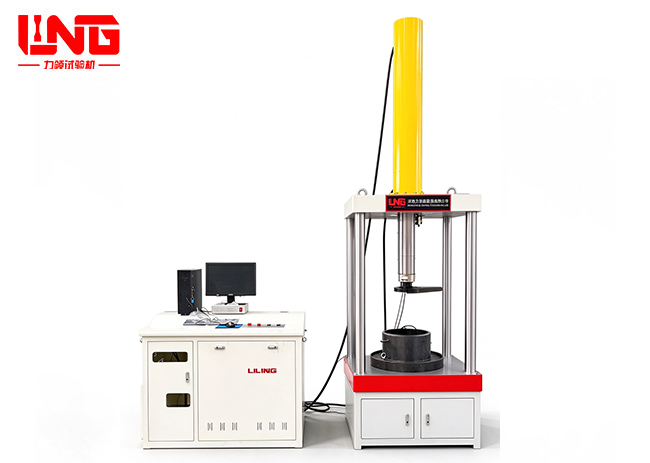
YAW-500 Microcomputer-controlled rim welding strength and pressure testing machine
The testing machine adopts a single-output-rod double-acting...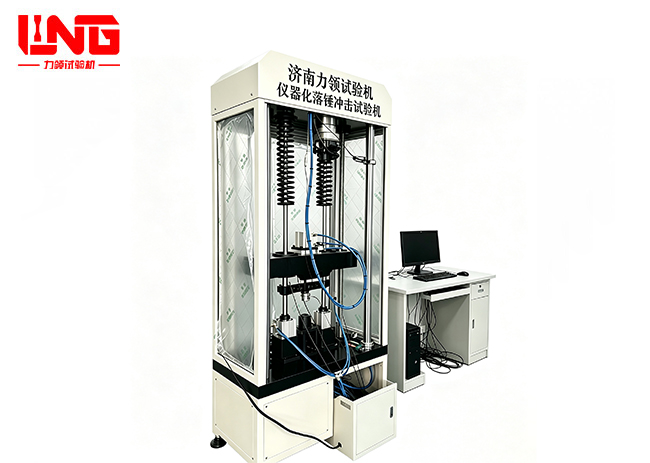
LLY-300 Instrumental drop hammer impact tester for composite plates
The instrumented drop hammer impact testing machine is mainl...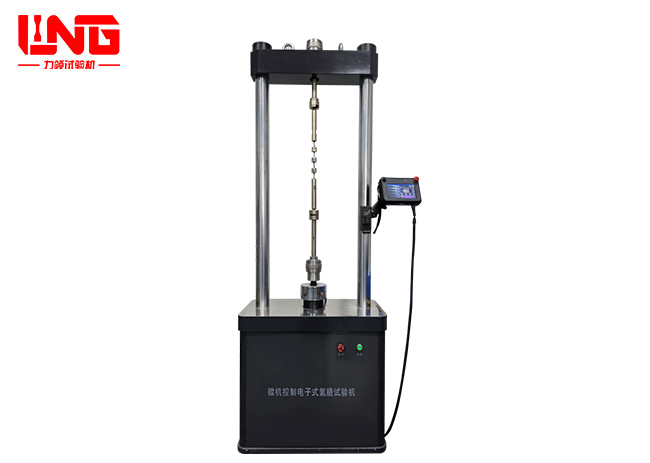
LQD-100 microcomputer controlled electronic durable hydrogen embrittlement tester
The LQD-100 microcomputer-controlled electronic endurance hy...
PQS-1000 two-channel axle housing fatigue testing machine
PQS-1000 two-channel axle housing fatigue testing machine is...
About LiLing
Product range
News
Contact LiLing
National Service Hotline:+86 18660398828
Address:Building 2, No. 6 Weihua West Road, Shizhong District, Jinan City, Shandong Province,China


Business consultation (WeChat)
Technical Support: ChaoYueHuLian
Links: